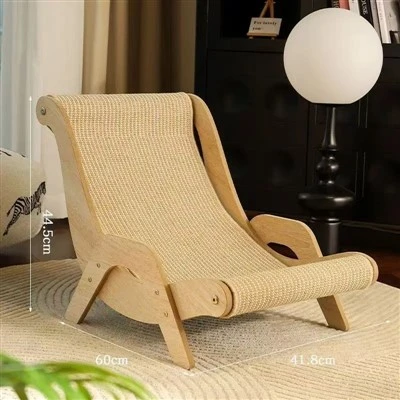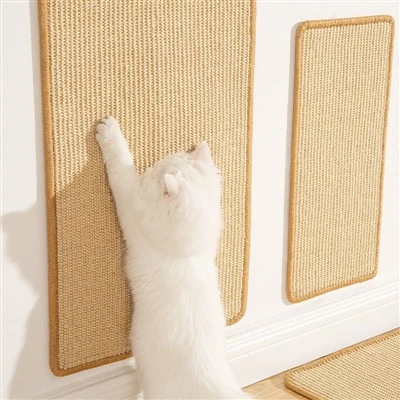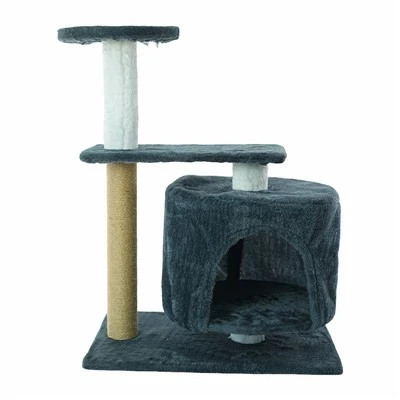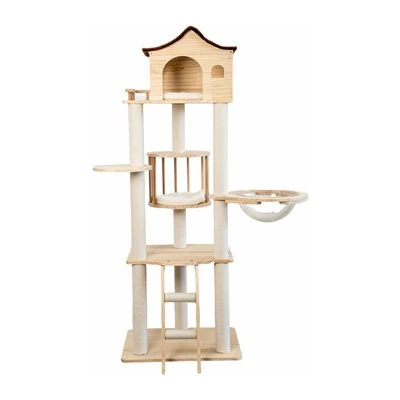


Hey there, fellow cat lovers! As a supplier of low profile cat trees, I often get asked one burning question: Are low profile cat trees stable? Well, let's dive right into it and find out.
First off, let's understand what we mean by low profile cat trees. These are cat trees that are typically shorter in height compared to the traditional tall ones that reach up to the ceiling. They usually have a more compact design, which can be a great option for smaller living spaces or for cats who aren't as big on climbing to great heights.


Now, stability is a crucial factor when it comes to cat trees. After all, we don't want our furry friends to end up taking an unexpected tumble while they're having a blast playing or napping on it. So, are low profile cat trees stable? The answer is a resounding yes, but it depends on a few key factors.
One of the main factors that contribute to the stability of a low profile cat tree is its base. A wide and heavy base is essential for keeping the cat tree steady. Think of it like a tripod for a camera. The wider the legs of the tripod, the more stable it is. The same principle applies to cat trees. A cat tree with a broad base distributes the weight evenly, reducing the risk of it tipping over when your cat jumps on or off it.
Another important factor is the materials used in the construction of the cat tree. High - quality materials make a big difference. For example, a cat tree made with solid wood or a sturdy metal frame is likely to be more stable than one made with flimsy materials. At our company, we use only the best materials to ensure that our low profile cat trees can withstand the antics of even the most energetic cats.
The design of the cat tree also plays a role in its stability. A well - designed low profile cat tree will have a balanced structure. The platforms and perches should be evenly spaced and attached securely to the frame. This helps to keep the center of gravity low and stable. Some of our low profile cat trees even have additional support features, such as cross - braces or reinforced joints, to enhance their stability.
Let's talk about the benefits of low profile cat trees in terms of stability. Since they are closer to the ground, they are generally less likely to tip over compared to tall cat trees. Tall cat trees can be more top - heavy, especially if your cat likes to climb all the way to the top. Low profile cat trees, on the other hand, are more grounded, making them a safer option for your cat.
Now, I know some of you might be thinking, "But my cat loves to climb high. Will a low profile cat tree still be suitable?" The answer is yes! Just because a cat tree is low profile doesn't mean it can't be fun. Our low profile cat trees come with a variety of features, such as scratching posts, hiding spots, and cozy beds. Your cat can still enjoy climbing, scratching, and playing on these cat trees, all while staying safe and stable.
If you're looking for some great low profile cat tree options, check out our Happy Cat Tree House. It's a compact and stable cat tree that your cat will love. It has a wide base and is made with high - quality materials, ensuring that it stays steady even when your cat is having a wild time.
Another option is our Modern Floor To Ceiling Cat Tree. Even though it's called a floor - to - ceiling cat tree, we also have low profile versions that offer the same stability and fun features. And don't forget about our Floor To Ceiling Modern Cat Tree, which is designed to be both stylish and stable.
In conclusion, low profile cat trees can be very stable if they are well - designed and made with high - quality materials. They offer a safe and fun option for your cat, especially if you have limited space. Whether your cat is a little climber or just likes to lounge around, a low profile cat tree can be a great addition to your home.
If you're interested in purchasing our low profile cat trees or have any questions about their stability or other features, we'd love to hear from you. We're always happy to help you find the perfect cat tree for your furry friend. Just reach out to us, and we'll start the conversation about your cat tree needs.
References
- "The Cat Tree Handbook" by Cat Care Experts
- "Pet Furniture Design and Stability" by Furniture Research Institute